In Cities of the Tide no island has everything. Yours has a forest and one precious good in its deposit: stone, iron, spices or amber. The other three are out there, on islands that belong to other players. So sooner or later every town turns to the sea, and the heart of the sea is the harbour.
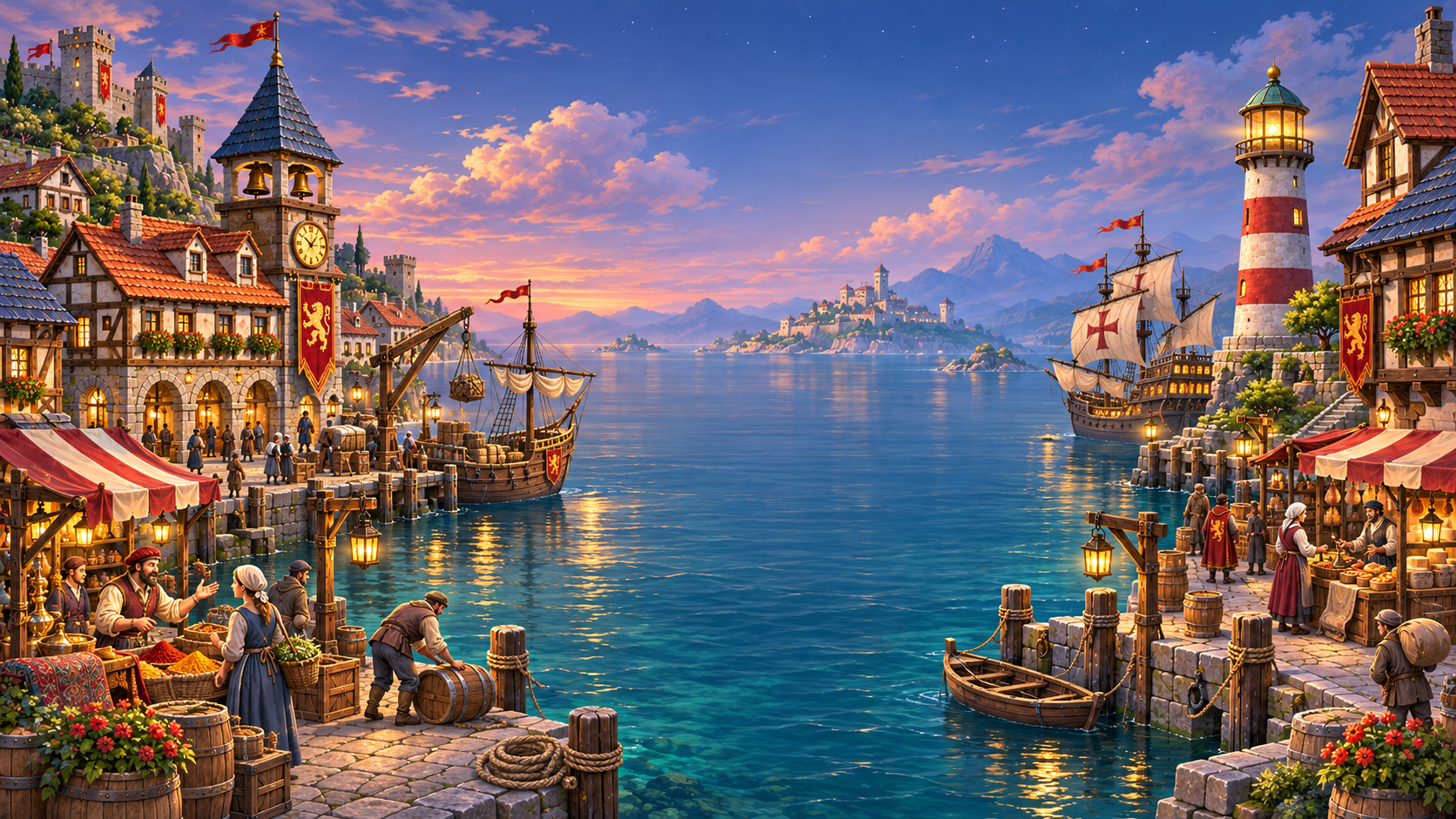
The Trading Port
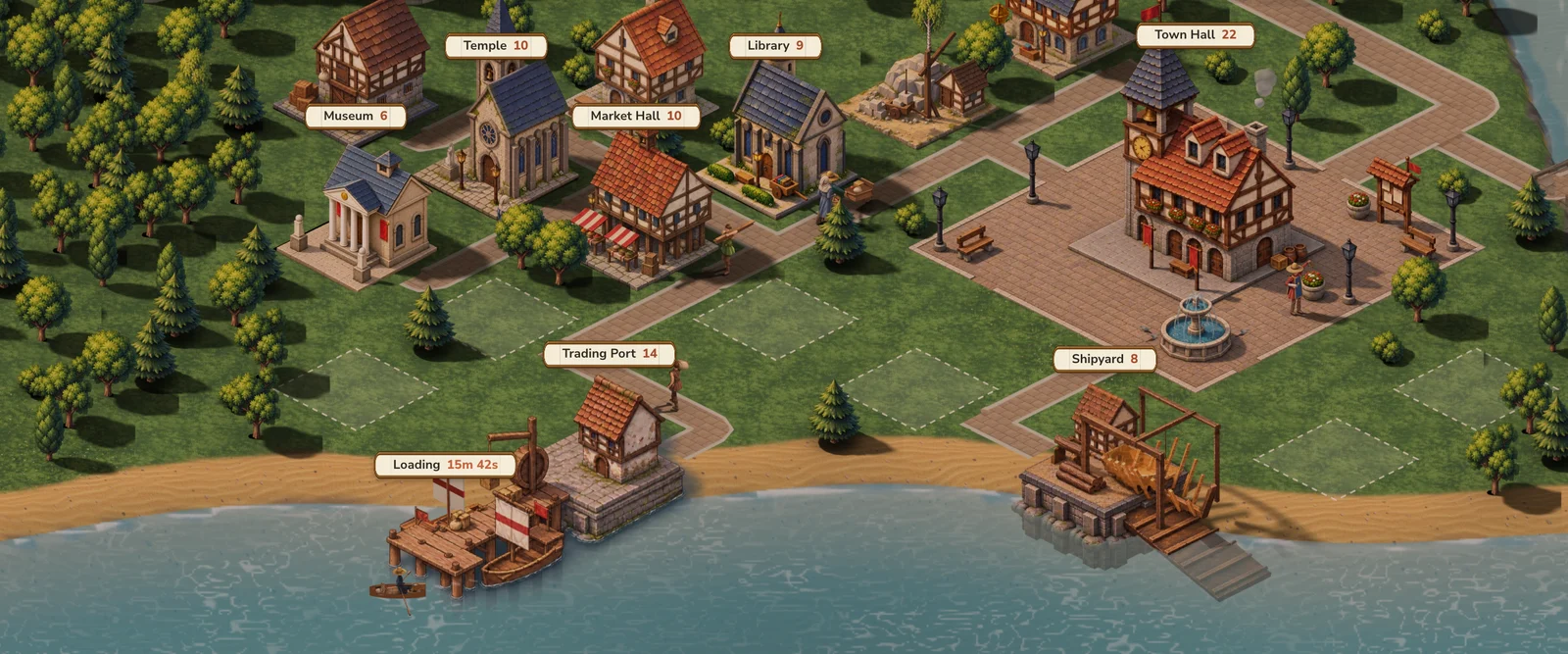
Every town by the water can raise a Trading Port. It is where goods leave and arrive, and where your merchant cogs come home. The cogs belong to your whole realm, not to one town: whichever of your towns sends goods, the cogs at home anywhere can sail from it. Each one carries 500 goods, and a realm can grow a fleet of up to 300 of them, each a little dearer to build than the last.
A cog does not sail the moment you send it. First it is loaded at the pier, crate by crate, and you can watch it happen in your town: the cog ties up at the quay, the crane swings, and only when the hold is full does it put out to sea. A bigger port loads faster; a harbour without one loads slowly. The pier loads one fleet at a time, so the next one waits its turn at anchor, and if you change your mind you can call a fleet back while it is still loading.
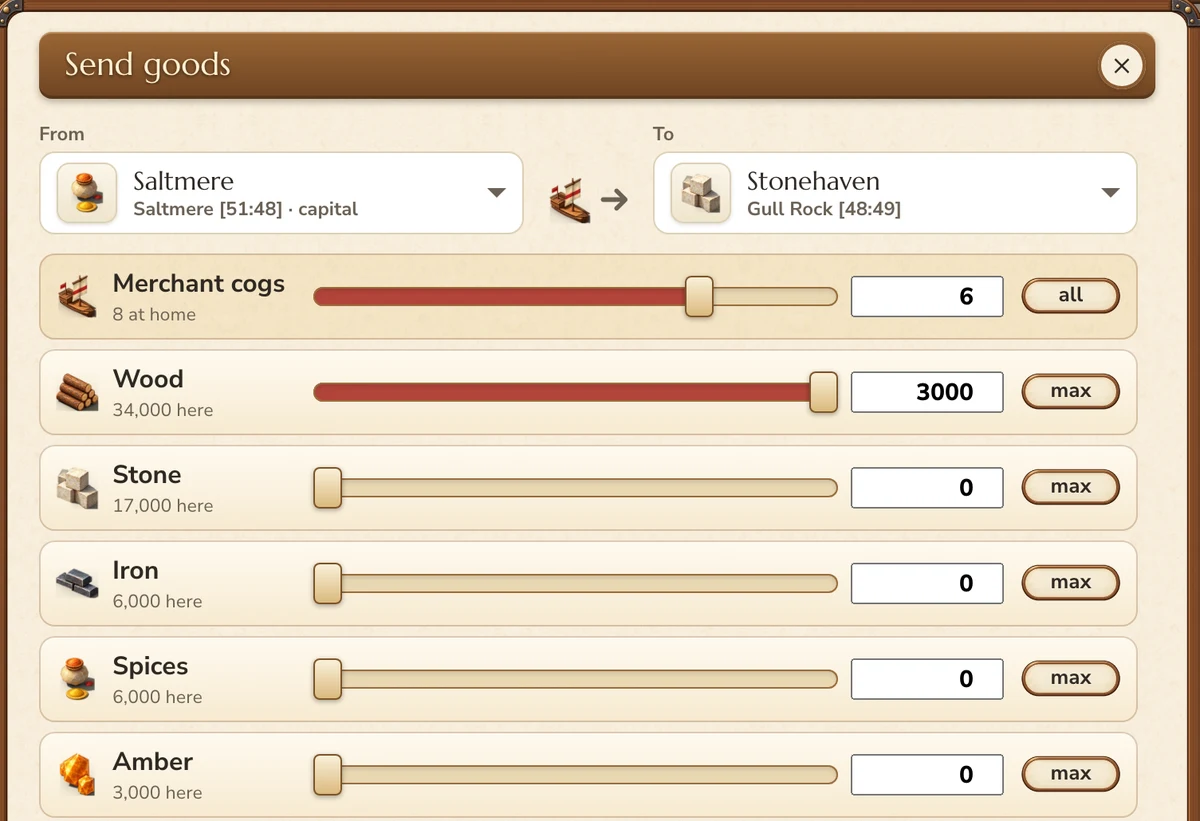
Sending goods
Moving goods between your own towns is a few sliders: choose where from and where to, how many cogs, and how much of each good. The window shows how long the loading takes and how long the crossing, and the cogs come home empty on their own. Your first colony on another island will live on these crossings until it can stand by itself.
Between two towns of one island there is no sea to cross: goods and armies go along the shore. Between islands it is the distance, the speed of the slowest ship and the time at the pier. A Lighthouse speeds up the fleets that leave or reach its town.
A market of players
There is no merchant in the game who buys anything at a fixed price. Every price at the Market Hall is set by a player. Put up wood, stone, iron, spices or amber for sale at your price, or offer gold for what you need, and wait for someone to take it. When someone does, their cogs sail to you: nothing changes hands until the ships arrive. A good island is worth something only if someone needs what it makes, so the market of every world will be shaped by its own players.
When the sea turns dangerous
A harbour is also a door. An enemy fleet that wins at sea can hold your harbour: while it stays, no merchant ship comes or goes. And every army that crosses the sea does it on merchant cogs, which also carry home whatever it takes. Trade and war use the same ships.
What comes next
The harbour is where we have spent the last weeks, and there is more to tell: colonies, the island wonders, the alliances. When the game opens we will send one email to everyone who asked for it: leave yours below, and follow us on Facebook, Instagram, YouTube and X.
Fair winds.